

Gaslighting - Between Manipulation and Madness?

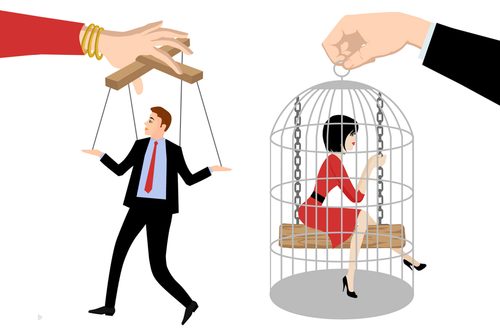
What is Gaslighting?
- Gaslighting is a form of psychological violence or abuse
- The victim becomes disoriented, insecure, or manipulated
- The victim’s awareness of reality and self is destroyed
- Often, gaslighters are unconscious of what is happening to the other person
- Affected people sometimes feel crazy or insane
- Mental health suffers greatly from this form of emotional manipulation



Gaslighting Definition – What is Gaslighting?
Gaslighting is a psychological concept where someone is psychologically harmed to weaken their self-esteem or sense of reality. It aims to confuse the individual, isolate them, and often create a dependency. In some instances, people may even start to worry they're going mad. Gaslighting can occur within personal relationships, but it's also seen in scenarios where a group manipulates an individual. Doubting one's own reality is a common sign of being gaslighted.
This often stems from one or more people causing the victim to question their reality over an extended time. It can be very straightforward or quite subtle. Commonly, this involves denying what actually happened or claiming things that didn't happen, like saying, "You never mentioned that," or "You claimed you did this," which makes the victim doubt their own memory. The foundation of gaslighting is trust.
The victim places their trust in the manipulator, and so they take their words as truth. Gaslighting can occur in personal relationships, workplaces, or friendships. This kind of emotional manipulation can occur in any type of relationship where there is a deliberate attempt to sway someone emotionally.
What does it mean to gaslight someone?
One of the main indicators that someone is being gaslighted is when the person begins to doubt their own perception of reality. He or she thinks too much and feels great anxiety doing so.
This is due to the fact that one or more people condition the victim to question their own perception of reality. This can (objectively) be very obvious, but can also be subliminal. Most of the time, this form of manipulation refers to the denial of events or vice versa. For instance, dialogue that begin with, "You never...","You said then that...","I am absolutely sure that you..." can make the victim doubt if certain events were indeed true or not. These lines are usually followed by constructions of illusions that make the victim doubt his or her own consciousness.
The core element of gaslighting is trust. The victim trusts the perpetrator(s), which is why their opinion is not questioned, but accepted.
Gaslighting can, therefore, not only occur in a relationship, but also in the workplace of social circle. This form of “brainwashing” appears more commonly in today’s society than you think. Victims are deliberately manipulated emotionally.
Is My Partner Manipulating Me?
How to Recognise Gaslighting
Gaslighting is difficult to recognise at first, as the manipulation can happen subliminally. Then, the longer the process of gaslighting takes place, the victim will soon doubt their reality that it makes them cling and become dependent on their perpetrators.
Here are some examples of gaslighting and signs to recognise gaslighting:
- Repeated lies and accusations.
- “You are too jealous.”, “You always look after everyone else.”, “You are to blame that...” The perpetrators constantly accuse you of things that you should have done or how you act, until you finally believe that they are true.
- The gaslighter likes to provoke arguments.
- In most cases, the perpetrator is well aware of his mistake or guilt, and can only cover it up by putting all the blame on you. He constantly denies being at fault, and instead turns the situation around. “That was nothing. You’re completely paranoid. You are crazy!”
- You are told that something is perfectly normal, although you may deny it and feel that it is not.
- It could be the little things like being told how to dress, but you might also catch your partner looking through your phone or otherwise pushing privacy boundaries. Your partner denies your feelings with a justification along the lines of; “You always overreact.” or “You are far too sensitive.”
- They tell you one thing, but do another.
- Promises are raised but not fulfilled – creating false hopes. “Everything will be fine.”, “Don’t worry, it’s really how it should be.” Gaslighters often promise that things will get better in the future – but it really won’t.
- You can no longer remember correctly that you did something, or the perpetrator claims or denies he did something.
- Gaslighters manipulate your memory. You remember the truth and facts, but the perpetrator denies or distorts your memory. They either deny that you did something or claim that you have done something. “I’ve told you so often that I...”, “You said at the time that you...”
- You start to doubt your perception of reality.
- You begin to doubt what is real or not because the person you trust gives you a feeling that you are out of your mind. Slowly but surely, you believe that too. You begin to trust the other person more than yourself. You doubt your own thoughts more than his or her representation of it.
- Your self-esteem is fading.
- If you are obsessed with the perpetrator, most especially if you put him or her on a pedestal, your self-esteem will dwindle down and slowly wither as a result of brainwashing. Obsession makes you ask questions like, “What does he / she want with me? I’m not worth anything anyway / can’t do anything right / am not lovable” or something along the same lines.
- It is possible that other people around you are also being manipulated.
- Sometimes, in order to validate and underpin the claims of your perpetrator, he or she also manipulates the people around you. This deprives you of any chance to turn to others for help. As a result, the victim is usually socially isolated and has less opportunities to escape his or her manipulator.
- The perpetrator behaves dominantly towards you, predominantly determines what you do, but like a different person when with others.
- Everything you think you know about your partner contradicts how he or she behaves in public – and you don’t seem to recognise your partner when others are around.
At the end of the day, the easiest way to recognise gaslighting is when you consistently feel confused. You supposedly do not remember correctly, your feelings have no justification, and you cannot or do not want to turn to others for help. You may feel lonely, and the only person your trust is your partner.
If you find yourself feeling insecure all the time and is ashamed to talk to others about how you are feeling, it’s likely that you are being gaslighted. If you notice that you have the tendency to take all the blame and feel the want to apologise even though deep down you know you’re not at fault, you are more than likely being manipulated through gaslighting.
How can I defend myself against gaslighting?
Whether you are a gaslighter or a victim of gaslighting, professional help is essential. Mental abuse through manipulation is an issue that has a serious impact on a person’s mental health. It affects not only the victim, but can also have negative drawbacks to the gaslighter.
What to do when you are the victim
If you fear or realise that you have become a victim of a gaslighter, it helps to point out how you are being manipulated. You can get a journal and note it down. It’s good to trust your feelings. If you feel something is wrong and it happens repeatedly, it could be a sign of a gaslighting – write it down.
Seeking professional help is the next step, especially if you notice that you are already socially isolated. If possible, it’s best to keep this from your partner as he might devalue your initiative and even try to prevent you from going. It is important to be attentive to your surroundings and be confident about trusting yourself.
People who are affected by a form of psychological abuse should be able to build distance from their perpetrator(s). Otherwise, it becomes difficult for them to regain their self-awareness. Gaslighters try to isolate their victims socially, which makes the manipulation effective for longer periods of time. Friends and family are often pushed out of their surroundings.
If you fear that you are being psychologically abused, try not to turn away and allow yourself to be isolated. Instead, speak to your partner about his concerns and try to find a compromise. Why should a partner disallow you to meet with your friends or family every now and then?


What to do if you are the gaslighter?
Most of the time, gaslighters are not (fully) aware of what they are doing.
If you find yourself exercising power over someone else – manipulating them in your favor, then you should take a step back and reconsider when and why you are doing it. Are you perhaps unsure about yourself? Afraid of being abandoned?
At the end of the day, the recommendation for perpetrators is the same as the victim – seek professional psychological help and seek advice from an outsider.
Gaslighting should not be downplayed. It is a form of human abuse. Gaslighting can also be, though not always, an effect of another mental disorder such as narcissism and other personality disorders. In order to treat the problem, professional psychological help is necessary.
